

What Is a Tech Pack? Components, Cost & How to Make One

A tech pack (short for technical package) is the instruction file a factory uses to make one garment style: a cover page, technical flat sketches, a bill of materials (BOM), a measurement spec sheet with tolerances and grading, construction details, colorways, artwork placement, and labels and packaging. The factory uses it to quote you, make your sample, produce your bulk order and check quality.
We write tech packs for brands and then manufacture from them in our own factory in China, so this guide explains what goes into one from both sides: what the designer puts in, and what the factory actually reads.
Want to see real ones first? Browse our clothing tech pack templates for tees, hoodies, joggers, leggings and sports bras.
Quick answer
A tech pack is the blueprint for one garment style. One style, one tech pack.
It usually contains a cover page, technical flat sketches, a bill of materials (BOM), a measurement spec sheet with tolerances and grading, construction details, colorways, branding placement, labels and packaging, and a version log. Some also include a cost sheet.
A spec sheet is only the measurement part of a tech pack. It is not a replacement.
You need one before you ask factories for quotes or samples. Without it, the factory fills every gap with its own defaults.
Costs range from a ready-made template (ours cost $24 to $98) to a custom tech pack from a designer (ours is $649 per design, including the design work).
What is a tech pack?
A tech pack is a set of drawings and documents containing every detail needed to produce a garment. It is the blueprint for the design.
It lets the designer communicate with the manufacturer, so the factory can turn a sketch into a real product. It contains flat sketches of the design, colorways, a size chart, product measurements, trims and labels, fabric specifications and special instructions.
A detailed clothing tech pack gives the manufacturer a clear understanding of how to make the item. It makes sure the goods are made as designed, in the right quantity, when you need them. It also lowers risk for both sides, because it sets out in writing what you ordered.
A tech pack is not a mood board or a sketch. A mood board shows the feeling you want. A sketch shows the shape. A tech pack gives production instructions: the fabric weight, the seam type on the side panel, the Pantone code for the thread, and how much the chest measurement is allowed to vary.
Why is a tech pack important?
A tech pack is the main way a designer and a manufacturer communicate. It works as an instruction manual for your product and keeps everyone working from the same information.
It is a shared language. A clear tech pack closes gaps caused by different languages, time zones and working habits. A drawing with measurements means the same thing in every factory.
It keeps every team aligned. Designer, pattern maker, sample room, production line and quality control all work from the same document.
It prevents costly sampling mistakes. Clear specs mean the first sample is closer to what you want, so you pay for fewer sample rounds and reach market sooner. It also lets the factory quote an accurate price, because it can cost every component.
It is the reference for quality control. You and the factory compare each sample and the bulk order against the tech pack. If something is wrong, you can point to the exact line that was not followed.
It is reusable. A finished tech pack is a base for the next style. Change the fabric, the color or one detail, and you have a new tech pack without starting from zero.
The best test of a tech pack is the first sample. If it comes back with only minor changes, the tech pack did its job.
Who makes and uses a tech pack?
Who makes it: the brand's designer or technical designer, a freelance tech pack designer, a design studio such as FittDesign, or the brand owner using a template. Some factories will draw one for you, but then the factory's defaults become your specs.
Who uses it:
Brands and designers, to put every decision about a style in writing.
Factories, to quote, source fabric and trims, and plan production.
Pattern makers, who build the pattern from the measurements and drawings.
Sample rooms and sewing lines, who follow the construction notes.
Quality control inspectors, who check samples and bulk against the measurements and tolerances.
What's inside a tech pack?
Every brand has its own checklist, and some tech packs are more detailed than others. These are the sections a factory expects to see. Leave one out and the factory will either ask you, or decide for you.
1. Cover page
The first page names the style and ties the document together:
Brand name and style name
Style number and season
Size range and sample size
Colorways offered
Date and version number
The version number matters more than it looks. A factory works on many styles for many brands at once. If your tech pack has no version number, the factory can build from an old file without either of you knowing.
2. Technical flat sketches and colored illustration
The drawings are the most basic part of the tech pack. They show the idea in visual form.
Include a colored illustration so everyone can see what the finished garment looks like. It shows the main fabric color, any secondary fabrics, and embroidery or print details at scale. Show the front and back. If the garment is complex, add the side view, and any special view such as the inside of a hood or a waistband.
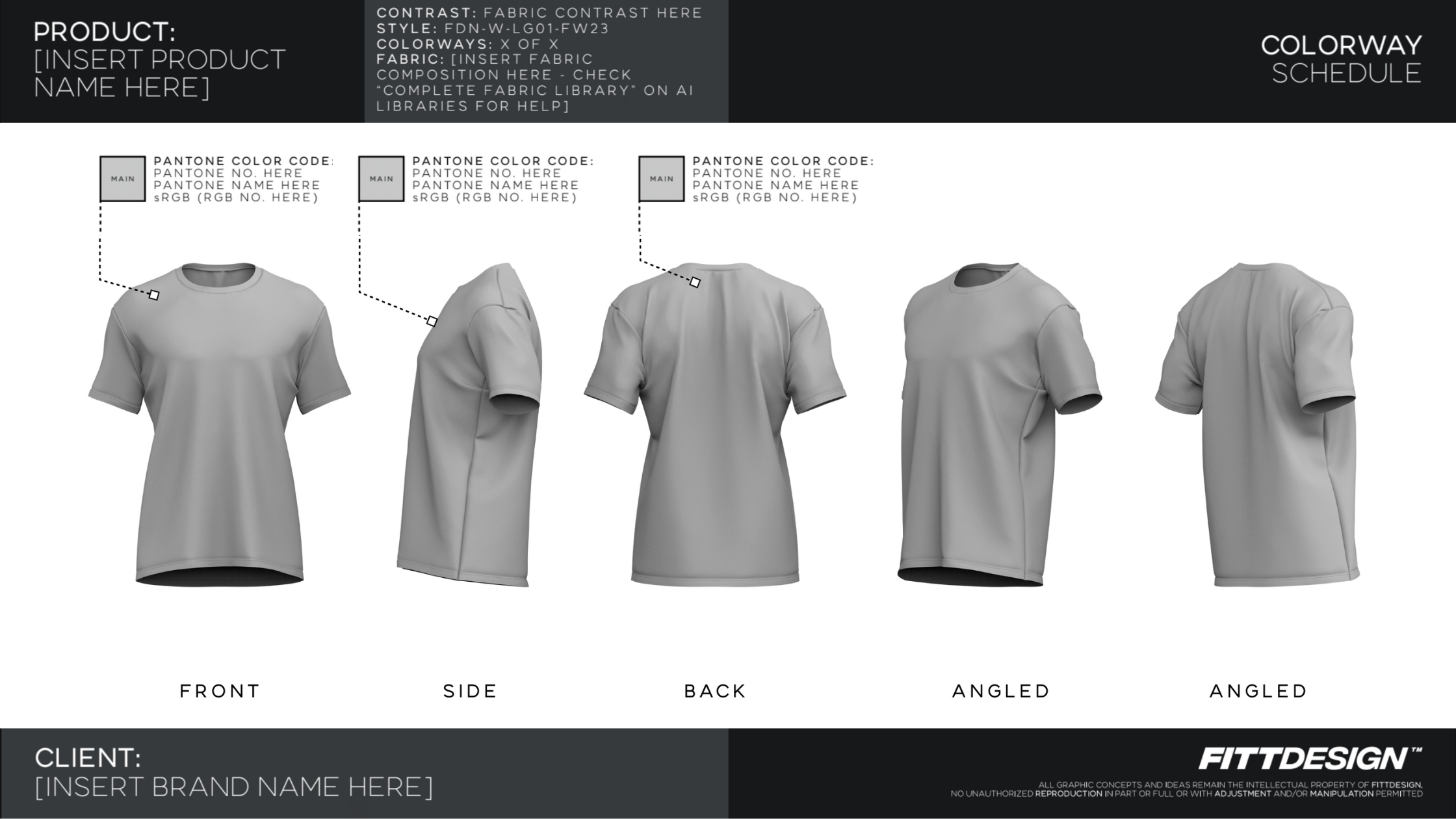
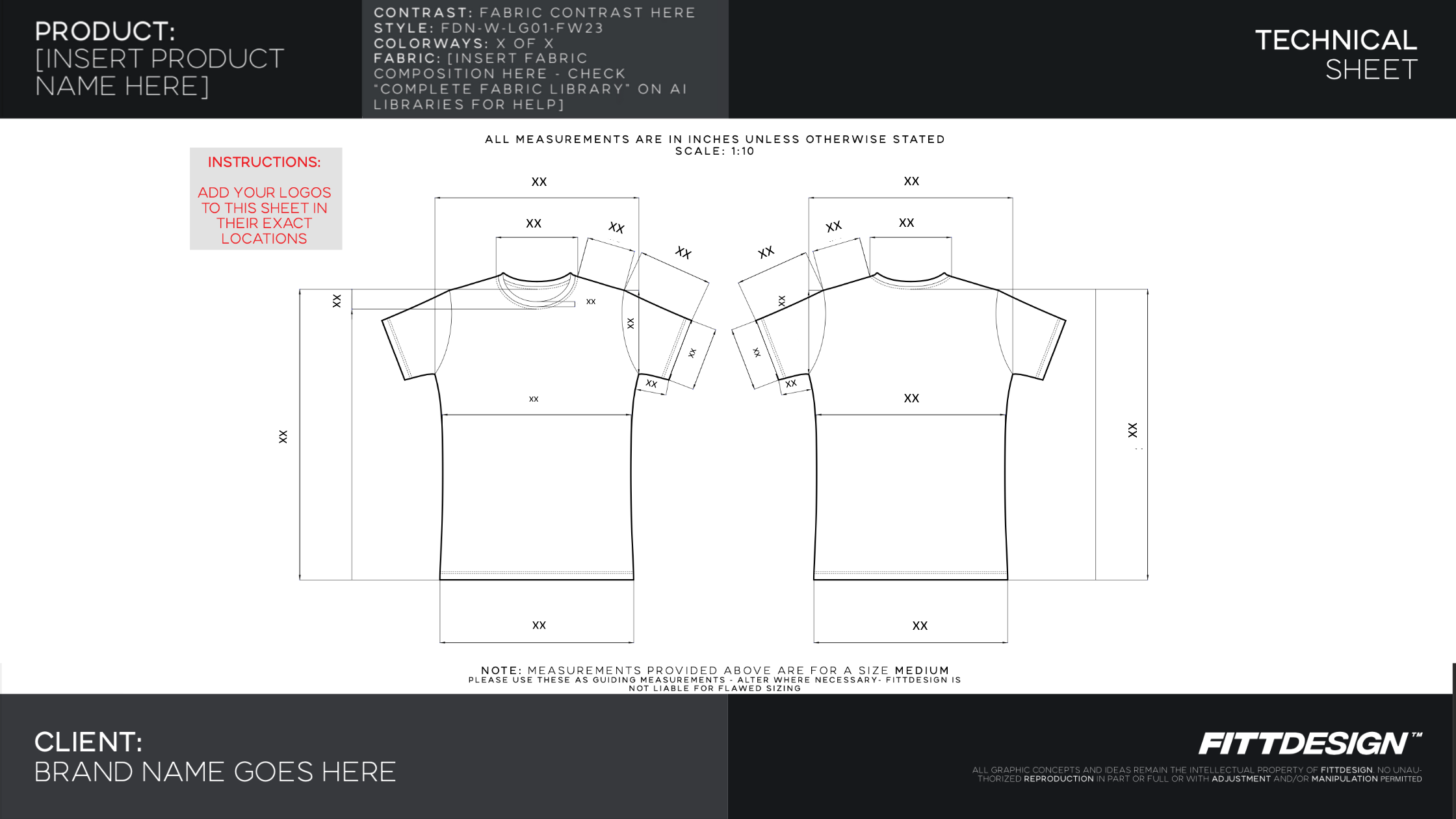
Also include a black-and-white technical flat: the garment drawn flat, to scale, with callouts pointing to every seam, pocket, closure, trim and label. This page shows stitch types, the silhouette, where each fabric goes, and any patches or appliques. It can also give thread thickness and SPI (stitches per inch).
Call out every detail, even small ones. If the garment has a fake welt pocket on the left panel, say so. Details like this change how the garment is made, and they change the price.
A common beginner mistake is sending only the front view. The factory needs the full construction before it can cut a single pattern piece. Learn the difference between the two drawing types in Flat Design Sketches vs. Technical Sketches.
3. Bill of materials (BOM)
The bill of materials lists every component that goes into the garment. For each item, give:
Fabric: composition (for example, 78% nylon / 22% elastane), weight in GSM, knit or weave type, finish
Lining and contrast fabrics
Trims: zippers (type, length, color), drawstrings (material, color, aglet type), elastic, buttons, snaps
Thread: color and thickness
Labels and tags: main label, care label, size label, hang tag
Color reference for every item (Pantone or another standard system)
Supplier and consumption per garment, if you know them
If the BOM is missing, the factory picks materials for you. It will choose what it has in stock or what fits its margin, not what fits your brand.
If you send a printed tech pack, attach fabric swatches and samples of trims such as buttons and closures, or something close to them.
Related reading: GSM Explained, The Ultimate Guide to Closures in Activewear, Hoodie Trims Ranked.
4. Measurement spec sheet: points of measurement, tolerances and grading
This section tells the factory how big every part of the garment should be, in every size.
Points of measurement (POMs) say exactly where each measurement is taken, for example chest measured 2.5 cm below the armhole, edge to edge. Every POM should match a labeled callout on the flat sketch. This way you and the factory measure the same spot, and quality checks compare like with like.
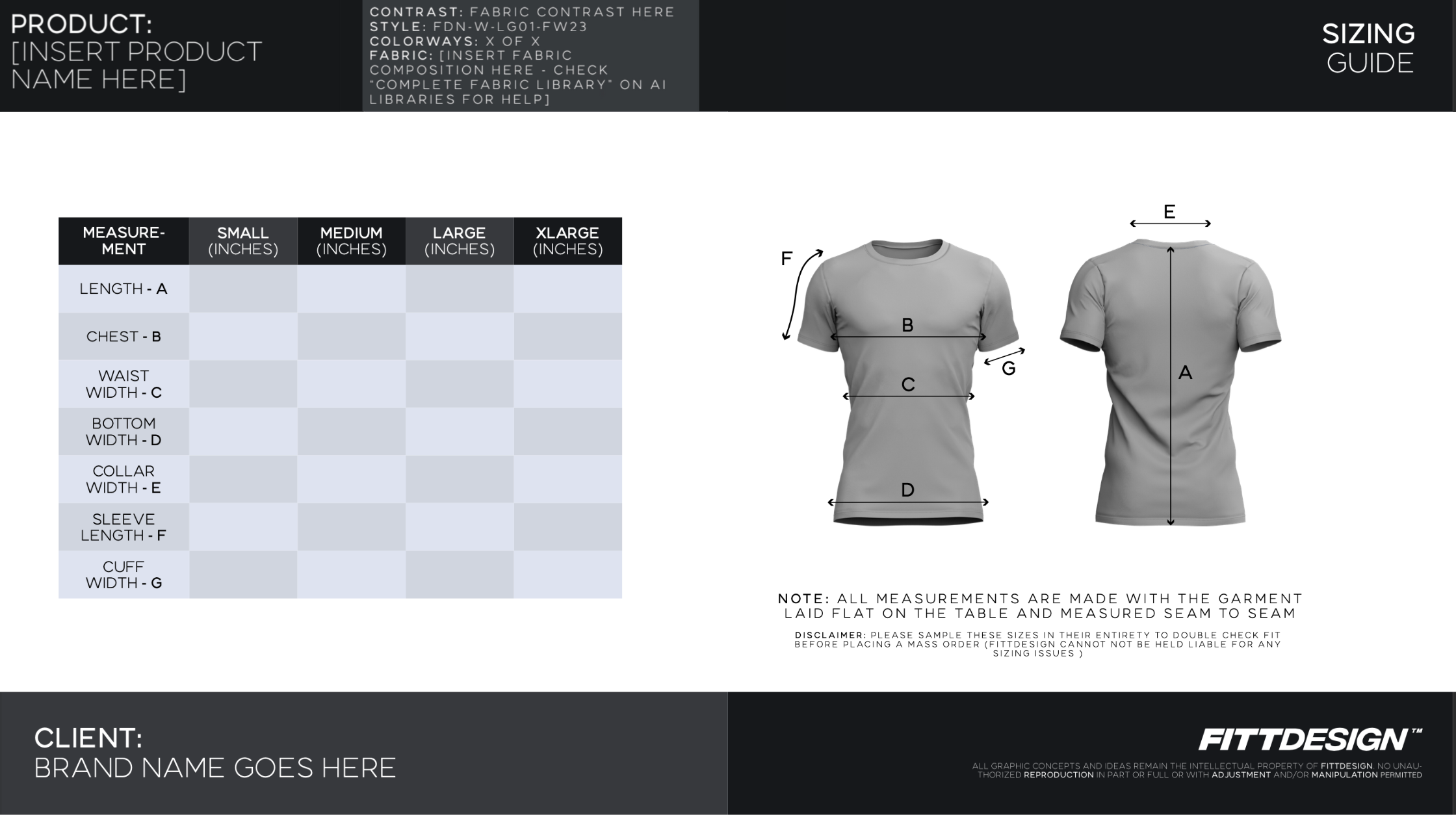
The spec sheet should include:
Sample size measurements for every POM: chest, waist, hip, body length, sleeve length, inseam, rise, and so on.
Measurement method: garment laid flat, and whether a measurement is taken relaxed or stretched.
Tolerance for each measurement: how far the finished garment can be from the spec and still pass. In our factory we work to ±1 cm on body measurements such as length, chest and waist, and ±0.5 cm on smaller points such as cuffs and straps.
Grading: how each measurement changes from size to size (the "grade rule"), and the full graded chart once it is ready.
Established factories often have their own pattern blocks and can suggest measurements if you have none. But if you want your brand's fit, the numbers need to come from you.
5. Construction details
Construction notes tell the sewing line how to put the garment together:
Seam type at each seam (for example overlock, flatlock, coverstitch, topstitch)
Seam allowance
Stitch type and SPI
Hem and edge finishes
Waistband construction (elastic, ribbed, folded; height; how it is attached)
Any special method, with a close-up drawing
Avoid "standard construction". What counts as standard changes from factory to factory.
6. Colorways
Most designs come in more than one color. List every colorway in a table: the main fabric color and the accent colors for trims, thread, zippers, drawcords and logos in each version. This tells the factory how many versions it is making and how much of each material to order.
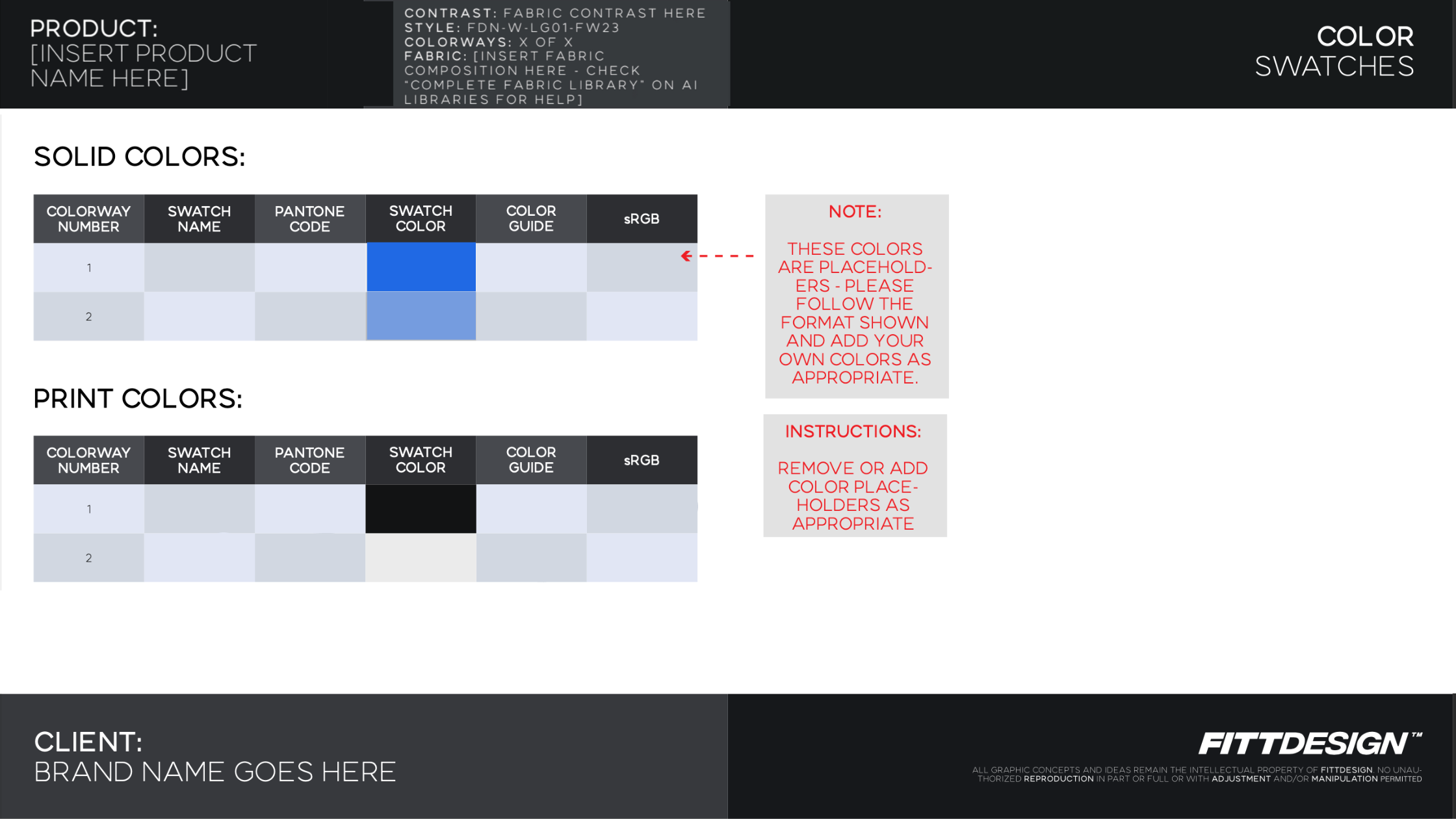
Use a standard system such as Pantone so colors match between your screen and the dye house. See What is the Pantone Color System?
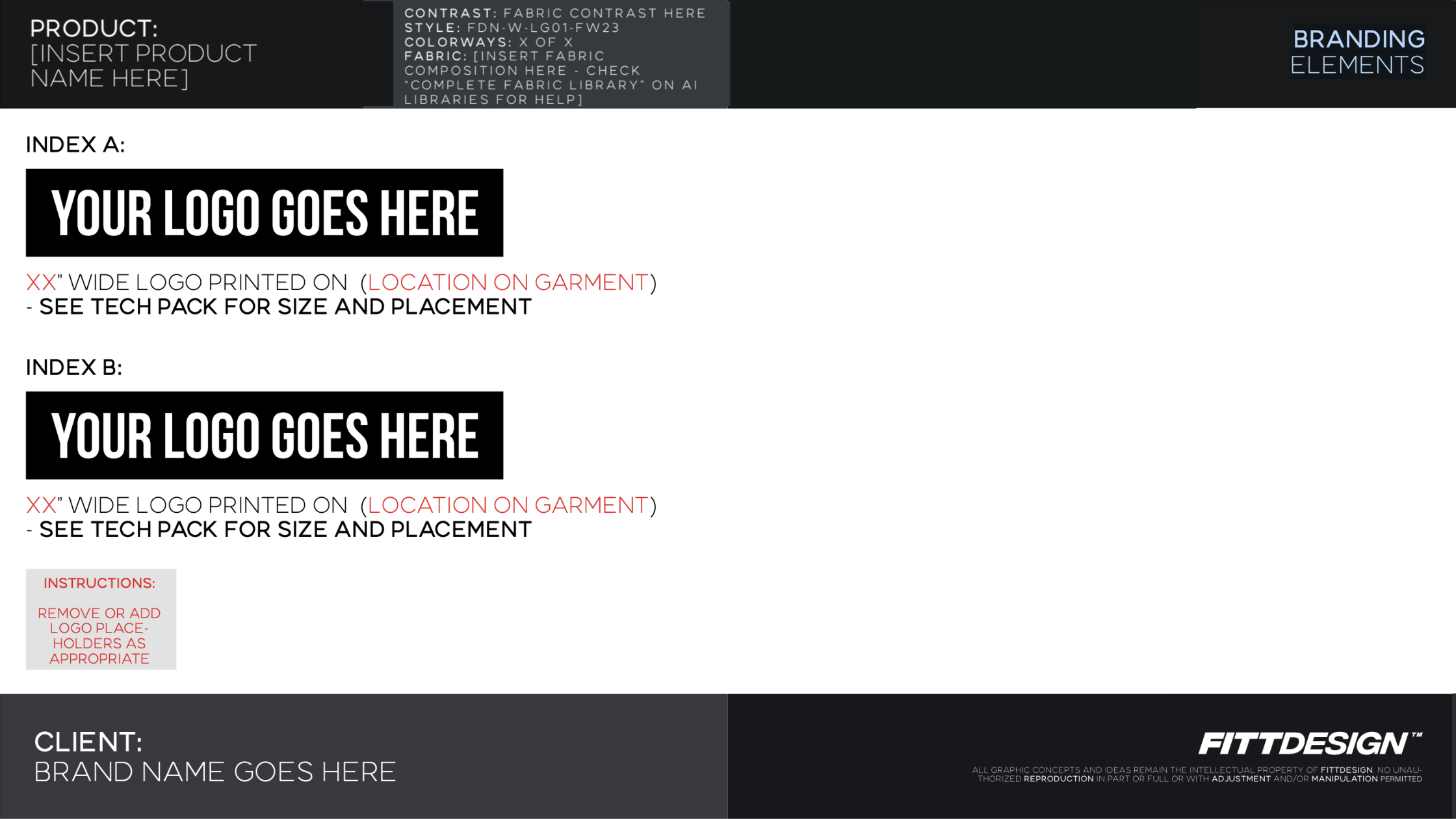
7. Branding and artwork placement
Show every logo, print and graphic. For each one give:
Vector artwork file
Size
Position, measured from a fixed point such as the center front or a seam
Method: screen print, heat transfer, silicone print, embroidery, sublimation
Color of each part of the artwork
8. Labels, packaging and folding
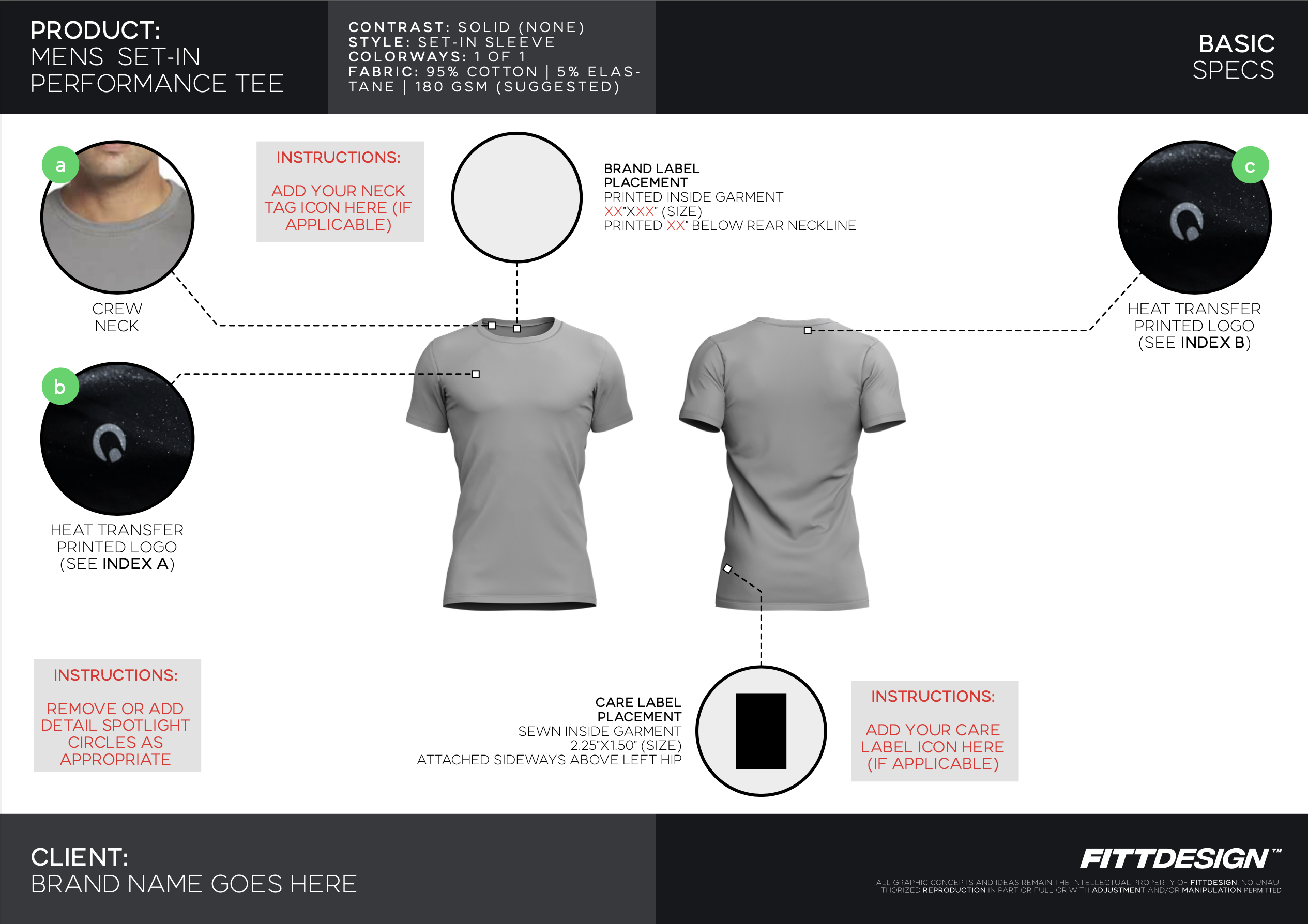
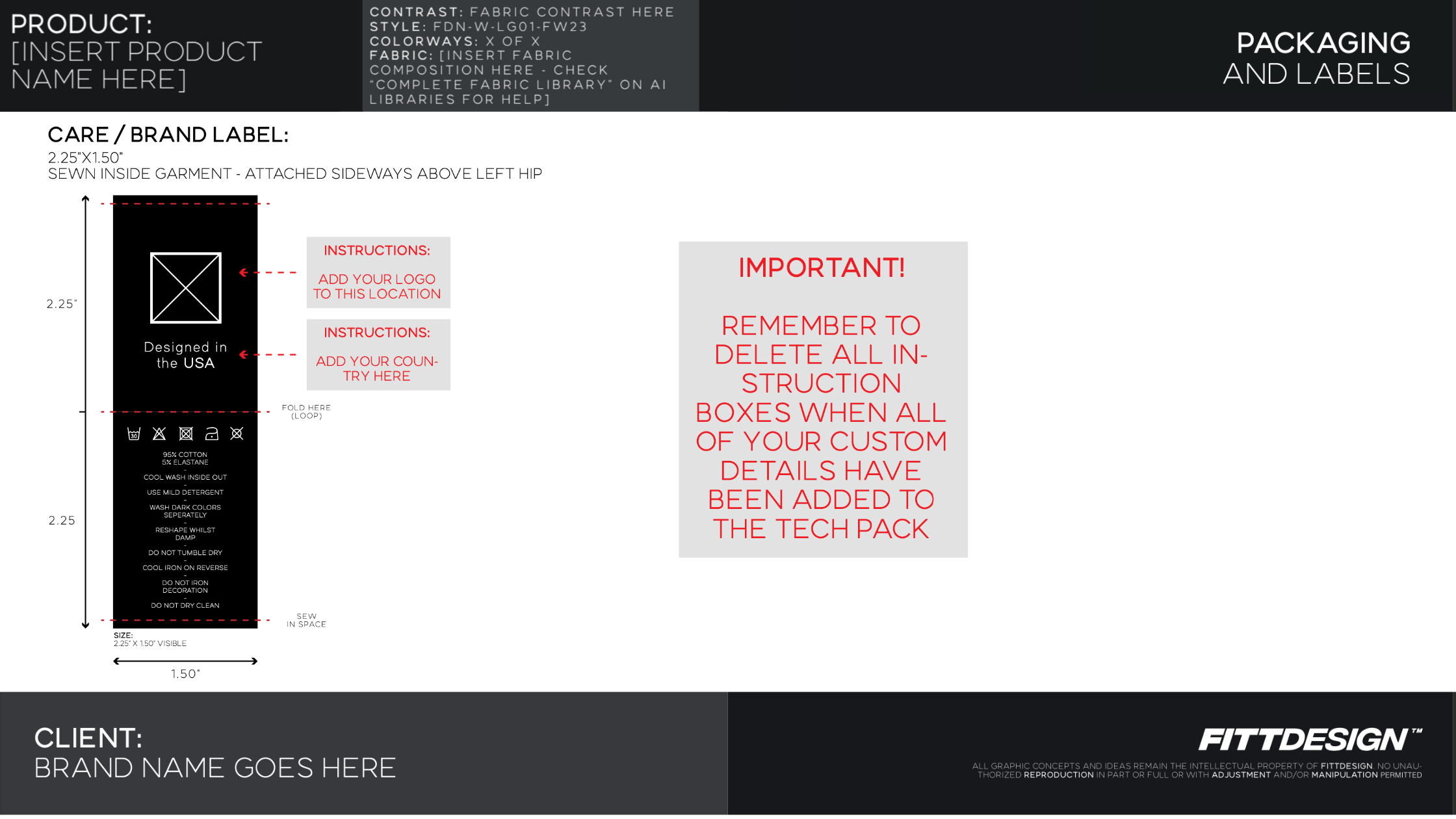
Describe what goes on and around the garment:
Care label: wording, material, size and placement. See our guide to care label icons.
Size label and main label: design, material, how it is attached.
Hang tags: card stock, print, how they are attached.
Packaging: poly bag type and thickness, folding method, stickers, cartons.
If you sell in the US, the care label has to follow the FTC Care Labeling Rule, and the garment needs its fiber content, country of origin and the maker's or seller's identity (for example an RN number) under the Textile Act. Put the exact label wording in the tech pack so the factory prints it correctly.
9. Version log
The version log tracks everything that happens between development and production: dates samples were sent and received, comments, revisions, changes, and amendments to earlier agreements. It keeps deadlines on track and shows which version is current.
When a sample comes back and you make changes, update the tech pack itself and raise the version number. Do not leave the change in an email thread. Six weeks later, nobody will find it.
10. Cost sheet (optional)
Some tech packs include a cost sheet with the cost to produce (CTP) the garment: materials, trims, labor and packaging per unit. If you source materials and manufacturing separately, it helps you track cost per garment against your budget.
This is an internal document. Share it only with people who need it. To set your selling price from that cost, see How to Price Your Clothing Brand.
How a manufacturer uses your tech pack
Here is what happens to your tech pack once it reaches the factory.
Quoting. The factory reads the BOM, the construction details and the number of colorways to work out a price per unit. A vague tech pack gets a rough quote, and the real cost shows up later. A complete one lets you compare quotes from different factories on the same terms.
Pattern making. The pattern maker builds the pattern from the measurement spec sheet and the flat sketches. Missing POMs mean the pattern maker guesses.
Sampling. The sample room sources the fabric and trims in the BOM and sews the first sample following the construction notes.
Sample review. You and the factory measure the sample against the spec sheet and tolerances, check fit, fabric, construction and branding, and record changes in the version log. Our guide on how to evaluate a sample from an overseas manufacturer walks through this.
Bulk production. Once you approve a sample, the approved tech pack and the approved sample together become the standard for the whole order. Production teams keep printed copies at the sewing line.
Quality control. Inspectors measure finished pieces against the POMs and tolerances. Anything outside tolerance fails.
From our side as a manufacturer, in our own factory: when a brand arrives with sketches and reference photos only, we have to make dozens of decisions for them before we can quote or sample. When a brand arrives with a complete tech pack, we can quote and start sampling straight away.
Tech packs for activewear: what to add
Activewear needs more detail than a basic cotton tee, because fit depends on stretch. If you are making leggings, sports bras, shorts or performance tops, add these to your tech pack:
Fabric stretch and recovery. State 2-way or 4-way stretch, the elastane percentage, and the GSM. Two fabrics with the same composition can feel very different at different weights.
Relaxed and extended measurements. Stretch garments are smaller than the body they fit. Give the waist both relaxed and stretched (extended), so the factory knows how far it must stretch without the elastic or seams failing.
Opacity. Say that leggings must not be see-through when stretched (the "squat test"), and which fabric weight meets this.
Seams for movement and comfort. Flatlock or coverstitch seams sit flat against skin and reduce chafing. Say where each is used.
Gusset. For leggings and shorts, give the gusset shape and size.
Waistband. Height, number of layers, elastic width, and any hidden pocket.
Bra details. Removable pad pockets, band elastic width, strap adjustability.
Functional finishes. Moisture-wicking, anti-odor or brushed finishes belong in the BOM next to the fabric.
For more on fabric choices, see Cut & Sew vs. Seamless Leggings and How to Create Your First Activewear Sample.
Tech pack vs spec sheet
A spec sheet is one part of a tech pack. It lists garment measurements across sizes. A tech pack includes the spec sheet plus the drawings, materials, construction, colorways, branding, labels and packaging.
People often use the two terms for the same thing, because the measurement chart is the first production document many brands create. But sending a factory only a spec sheet is like giving a builder the room sizes without the materials list or the drawings. It can work for a simple repeat style with a factory that already knows your standards. For a new style, it is not enough.
How to make a tech pack
Draw the flat sketches. Front, back, and side if needed. Add a callout for every seam, pocket, closure, trim and label.
Build the BOM. List every fabric, trim, thread, label and tag with composition, weight, color reference and supplier if known.
Set the measurements. Choose the sample size, list every POM with a tolerance, and add the grade rules for the full size range. Label each POM on the sketch.
Write the construction notes. Seam types, stitch types, SPI, finishes. Add a close-up drawing for anything unusual.
Add colorways, artwork placement, labels and packaging.
Fill in the cover page. Style name and number, season, sizes, date, version 1.0.
Check it against itself. Every item in the BOM should appear on a drawing. Every POM should have a callout. Every colorway should list a color for every component.
Send it, then keep it current. After each sample, update the tech pack, raise the version number, and resend.
What tools do you need?
You can make a tech pack by hand with paper, pens, a ruler and coloring supplies. It costs nothing in software, and it works as long as the drawings and instructions are clear. The downside is that you start from scratch every time.
The industry standard is Adobe Illustrator or CorelDRAW for the drawings, and Microsoft Excel for the specs and worksheets. Dedicated tech pack software and PLM systems also exist, which keep the drawings and tables in one file.
The fastest route for most new brands is a tech pack template. A template gives you the structure and a finished technical drawing, so you do not miss a section. Our tech pack templates come as layered Illustrator (AI) and Photoshop (PSD) files with a true-to-scale flat drawing and measurement information, plus a short PDF tutorial. You reuse the same template for every new version of the style.
How much does a tech pack cost, and how long does it take?
It depends on who makes it and how complex the garment is:
Make it yourself by hand or in Illustrator and Excel: your time, from hours to days per style depending on experience.
Ready-made template (FittDesign): $24 to $98 per style, most around $48. Instant download, then your edits.
Custom tech pack from a designer (FittDesign): $649 per design, including the design sketches, in 15-22 business days.
Freelancers: about $50 to $500 per style.
Agencies and managed services: about $400 to $800 per style, with full packages up to about $1,500.
The freelancer and agency ranges are the prices other tech pack providers publish (2026).
A tech pack often costs less than one extra sample round, and it can save several.
If you buy a template and want us to make it, the Template Manufacturing Service add-on ($349 per template) customizes the template's tech pack with your logo and three colors of your choice and gives you access to our manufacturing service. Samples and bulk units are charged separately.
Common tech pack mistakes
Front view only. The factory needs the back, and the side for anything with side seams, pockets or panels.
No tolerances. Without them, you have no clear basis to reject a sample or a bulk order.
"Standard construction" or "same as reference". Say exactly which seam and stitch you want.
Colors described in words. "Navy" is dozens of colors. Use a Pantone or other standard code.
Measurements with no POM drawing. The factory measures in a different spot and the numbers do not match.
Stretch garments with relaxed measurements only. The waistband fits on paper and rolls down in use.
Changes left in email or chat. Update the tech pack and the version number every time.
Missing labels and packaging. The garment arrives correct but in the wrong bag with no care label.
Tech pack examples
Here are examples of detailed tech packs made by FittDesign for tees, leggings and joggers. See all of them in our tech pack templates.
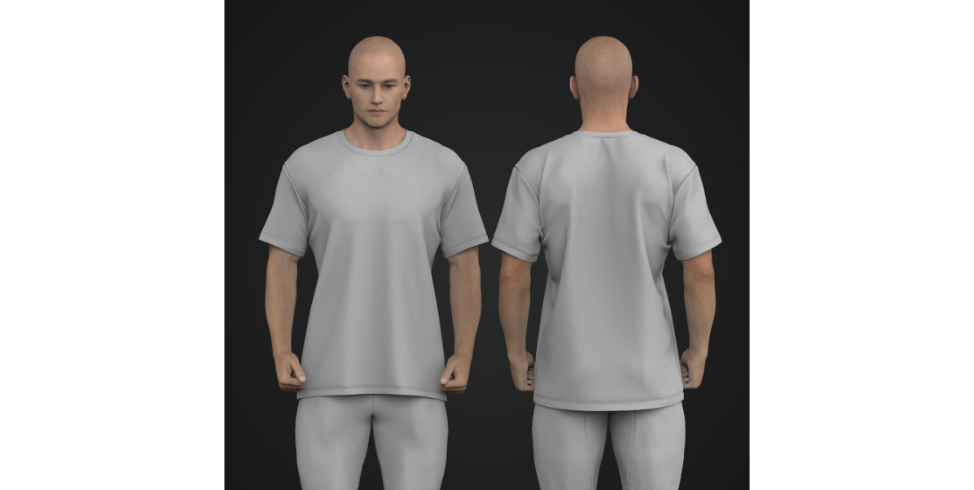
Mens Oversized Dropped Shoulder T-Shirt
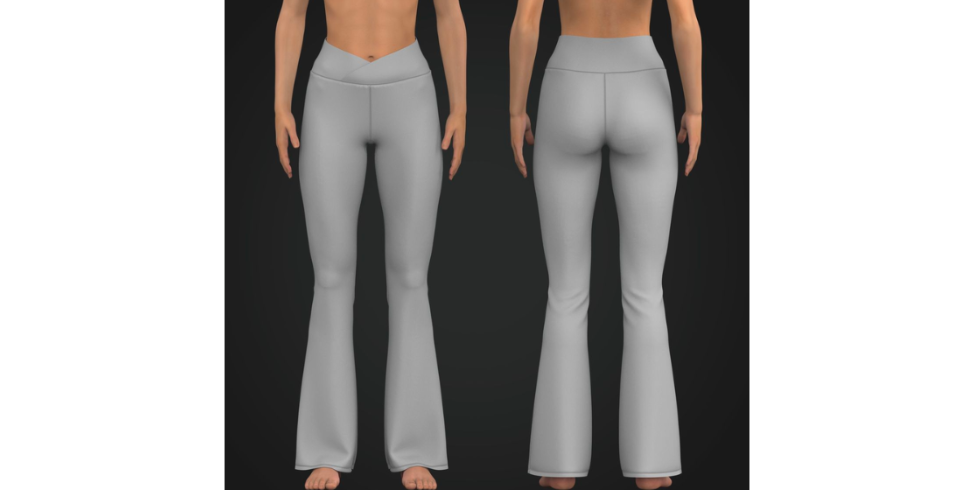
Ladies Cross Over High-Waisted Flared Leggings
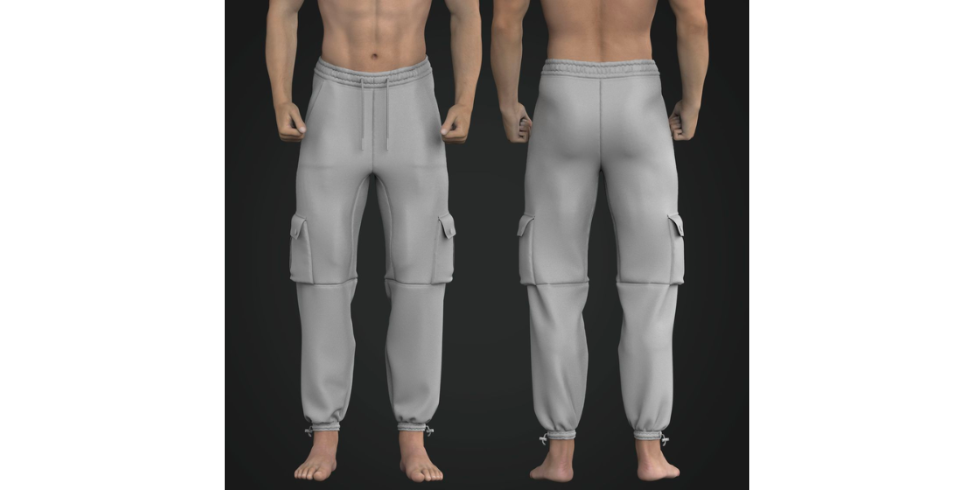
Mens Elastic Cuff Woven Cargo Joggers
Ladies One Shoulder Side Cut-Out Sports Bra
Watch: what goes into a tech pack

Frequently asked questions
What is a tech pack in fashion?
A tech pack is the document a clothing manufacturer uses to make your garment. It contains technical drawings, measurements, materials, construction details, colors, branding and packaging instructions for one style.
What is included in a tech pack?
A cover page, technical flat sketches, a bill of materials, a measurement spec sheet with tolerances and grading, construction details, colorways, artwork placement, labels and packaging, and a version log. Some tech packs also include a cost sheet.
What is the difference between a tech pack and a spec sheet?
A spec sheet lists garment measurements. It is one section of a tech pack. The tech pack adds the drawings, materials, construction and everything else the factory needs.
Who uses tech packs?
Brands and designers write them; factories, pattern makers, sample rooms and quality inspectors work from them.
Do I need a tech pack to manufacture clothing?
If you want a custom design made to your specifications, yes. Without one, the factory makes the missing decisions for you, and many factories will not quote a custom style without one. If you only want to add your logo to a factory's existing blank, you may not need one.
How much does a tech pack cost?
A ready-made template from FittDesign costs $24 to $98. A custom tech pack from FittDesign costs $649 per design, including the design sketches. Freelancers and agencies charge from about $50 to $800 per style, and full packages up to about $1,500.
How long does it take to make a tech pack?
An experienced technical designer can finish a simple tee in a few hours. Complex garments take longer. A full custom design and tech pack from FittDesign takes 15-22 business days, including concept sketches and revisions.
How many pages is a tech pack?
It depends on the garment. A complete tech pack has at least one page for each section above, so even a simple tee runs to several pages. Garments with many colorways, trims or construction details need more. Add pages only when they carry information the factory needs.
Does a tech pack include a pattern?
Usually not. The factory's pattern maker builds the pattern from your tech pack's measurements and drawings. Patterns are a separate product; we sell graded sewing patterns for some styles.
Does a tech pack include a sample?
No. The tech pack is the instructions. The factory makes the sample from it, and you compare the sample against the tech pack.
Can I make a tech pack myself?
Yes. You can draw it by hand or use Illustrator and Excel. A template helps you avoid missing a section. The key is that every detail the factory needs is written down.
My factory says it doesn't need a tech pack. Should I trust that?
The factory may be able to quote from a photo. But without a tech pack you have nothing written to check the sample against, and nothing to point to if the bulk order is wrong. A factory that works without one is making decisions on your behalf.
Need a tech pack?
FittDesign is a design and manufacturing company for activewear and sportswear brands. We have worked with 1,300+ clients, made 5,600+ original designs and produced over 2.5 million garments over 9+ years. We write factory-ready tech packs and manufacture from them in our own factory in China, from 100 units per color, with samples in 2-3 weeks.
Ready to start now? Browse tech pack templates.
Want a custom design and tech pack? See our product design service.
Already have a tech pack? Get it made through our manufacturing service.
Questions? Contact us.
About the author
Rami is Head of Development at FittDesign. He has spent 8 years helping 1,000+ brands create activewear.


